
One of the roles of an OB/GYN is to help identify women who are at-risk for hereditary cancer before cancer develops. This is important so that these women can undergo increased screening and other necessary measures to reduce their risks.
But how do you know if you have a predisposition to hereditary cancer in the first place? Today, genetic testing is available to pinpoint certain inherited changes in an individual’s genes that are a sign of inherited cancer susceptibility syndromes. Genetic testing can also be performed to determine if family members who have not yet developed cancer have the same gene mutation. By taking the steps to learn about possible hereditary cancer you are arming yourself with critical information so that you can be proactive in the preventative screening process.
COMMON HEREDITARY CANCERS
You may have an increased risk for developing gynecological cancers if you have a family history of cancer, have other family members with the BRCA1 or BRCA2
genes, are over the age of 50, or have human papillomavirus (HPV). The most common syndromes that are related to breast and gynecologic cancers include:
- Hereditary Breast and Ovarian Cancer Syndrome: Is associated with mutations in the BRCA1 or BRCA2 genes, which can result in breast, ovary, melanoma, prostate, or pancreatic cancers.
- Lynch Syndrome: Is caused by mutations in the MLH1, MSH2, MSH6, PMS2, or EPCAM genes which can result in uterine, ovary, colon, pancreatic, gastric, small intestine, central nervous system, renal, or sebaceous cancers.
- Cowden Syndrome: Due to mutations in the PTEN gene, individuals with this syndrome may have a higher risk for breast, uterine, thyroid, colon, renal, and
sebaceous cancers. - Li-Fraumeni Syndrome (LFS): This is caused by a mutation in the TP53 gene and is associated with an increased risk for breast, adrenal, brain, lung, and endometrial cancers.
- Peutz-Jeghers: Caused by mutations in the STK11/LKB1 gene, this syndrome puts individuals at risk for gastrointestinal, breast, ovarian, uterine, and cervical cancers.
TYPES OF HEREDITARY CANCER SCREENING
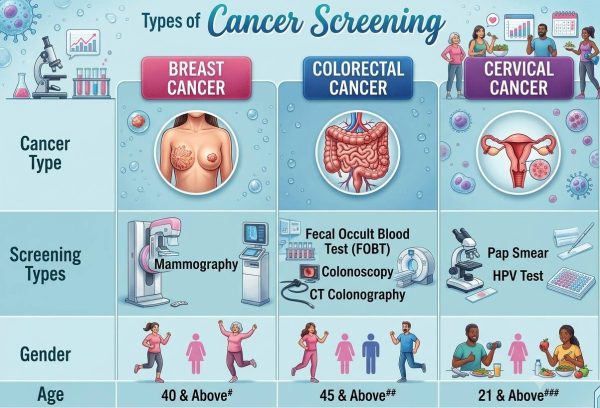
If I determine that you have an increased risk of hereditary cancer, I will work closely with you to develop a personalized screening plan based on your individual risk factors and family history. My goal is to detect any cancer at its earliest and most treatable stage, when treatment is often most effective and outcomes are the best. The type of screening I recommend will depend on the specific hereditary cancer syndrome you may be predisposed to, and I will explain each recommendation so that you understand why it is important for your long-term health.
For women with an inherited risk of breast cancer, such as those with BRCA gene mutations, I may recommend beginning breast MRI screening between the ages of 20 and 25, as MRI is more sensitive than mammography in younger women. Mammograms are generally introduced later, depending on your age and individual risk profile. If you are at increased risk for gynecologic cancers, I may also recommend additional surveillance, which can include transvaginal ultrasound, endometrial biopsy, or other appropriate evaluations based on your personal history. Together, we will discuss the most appropriate screening schedule, how often you should be evaluated, and any preventive options that may help reduce your cancer risk.