
Birth Control is used to prevent pregnancy and can be used by both women and men. There are a large variety of different types of birth control available today. If you are sexually active and do not want to become pregnant, you should educate yourself on the many different options so that you and your partner can decide which method is right for both of you. Before choosing a birth control method, be sure to discuss your options with your partner and your doctor. Remember, birth control is only effective if it is used properly, so be sure you fully understand how to correctly use the method of your choice. There are many different methods of birth control, with some of the most common being: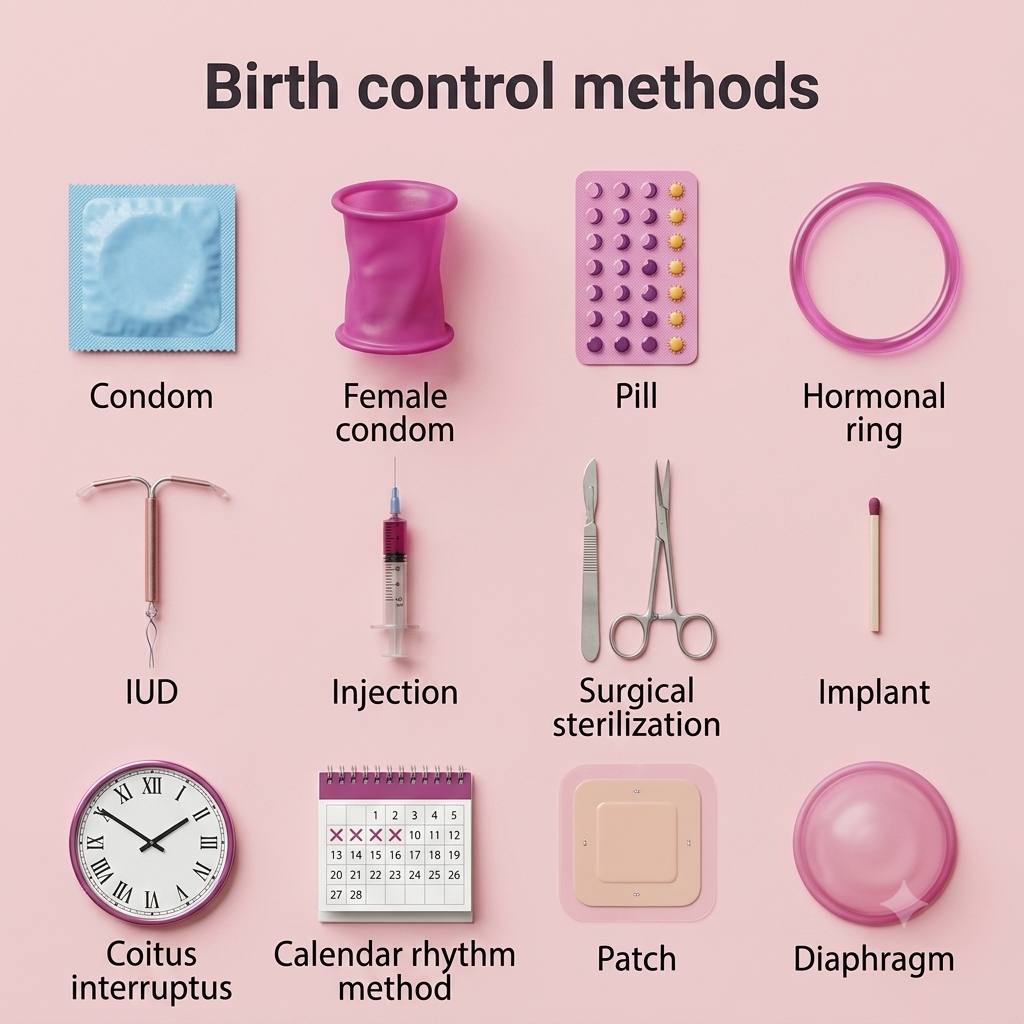
- Abstinence: Abstaining, or choosing not to have sex is the only method of birth control that is 100% effective.
- Combined Hormonal Contraception: This includes methods containing estrogen such as birth control pills, vaginal rings, or estrogen patches. The pill is taken daily, the vaginal ring is used once a month, and the patch should be changed weekly. When used correctly, these methods can be 99% effective.
- Depo-provera®: This is an injection of the hormone progestin that provides protection from pregnancy for 12-15 weeks.
- IUD: An intrauterine device (IUD) is a small, T-shaped device that is placed into the uterus to prevent the fertilization of an egg. IUDs can be made of copper or plastic and are almost 100% effective.
- Nexplanon®: This is a small rod that contains hormones and is placed under the skin of the upper arm. It works by delivering a progestin hormone over a period of three years. This is the most effective form of reversible contraception available.
- Mini Pills: These are birth control pills that contain only progestin. They work by thickening the cervical mucus so that sperm can’t reach the egg.
- Male Condoms: Male condoms are a thin covering consisting of plastic, latex, or animal membrane that is used to prevent semen from entering the vagina. Latex condoms may provide some protection from STDs.
- Female Condoms: A female condom is a lubricated plastic tube with a flexible ring at each end. It is inserted into the vagina so that the closed end of the tube covers the cervix, and the other endslightly covers the labia. This blocks sperm from entering the womb.
- Diaphragm: This is a round piece of rubber that is placed into the vagina, against the cervix. It works by stopping semen from entering the womb. Spermicide must be used along with a diaphragm.
- Male Sterilization: A vasectomy is a sterilization procedure for men. It involves cutting and sealing the vas deferens, which are the tubes that carry sperm. This prevents the sperm from leaving the testes. While this procedure is nearly 100% effective against pregnancy, it does not protect against STDs.
- Female Sterilization: Also known as “having your tubes tied”, this causes permanent sterility by preventing an egg from moving to the uterus. It also blocks sperm from entering the ovulating ovary where fertilization occurs. This method does not protect against STDs.