
What is Ventriculomegaly?
Ventriculomegaly is a condition in which the fluid-filled spaces in your baby’s brain, called the ventricles, are larger than expected. This occurs when cerebrospinal fluid (CSF)—the fluid that protects the brain and spinal cord—does not circulate or drain normally, causing it to accumulate within the ventricles.
I usually diagnose ventriculomegaly during a detailed prenatal ultrasound, most commonly between 18 and 22 weeks of pregnancy, although it can also be detected later. If I identify enlarged ventricles, I will recommend additional tests to better understand the cause, monitor your baby’s development, and guide the most appropriate care throughout your pregnancy.
It is important to know that ventriculomegaly is not the same as hydrocephalus. Ventriculomegaly refers to enlarged ventricles before birth, while hydrocephalus is diagnosed after birth when excess fluid causes increased pressure on the baby’s brain.
What Causes Ventriculomegaly?
In many pregnancies, ventriculomegaly occurs without a clear cause and is not something you could have prevented. It is usually not inherited and is rarely caused by anything you did during pregnancy.
In some cases, ventriculomegaly may be associated with:
A blockage that prevents cerebrospinal fluid from flowing normally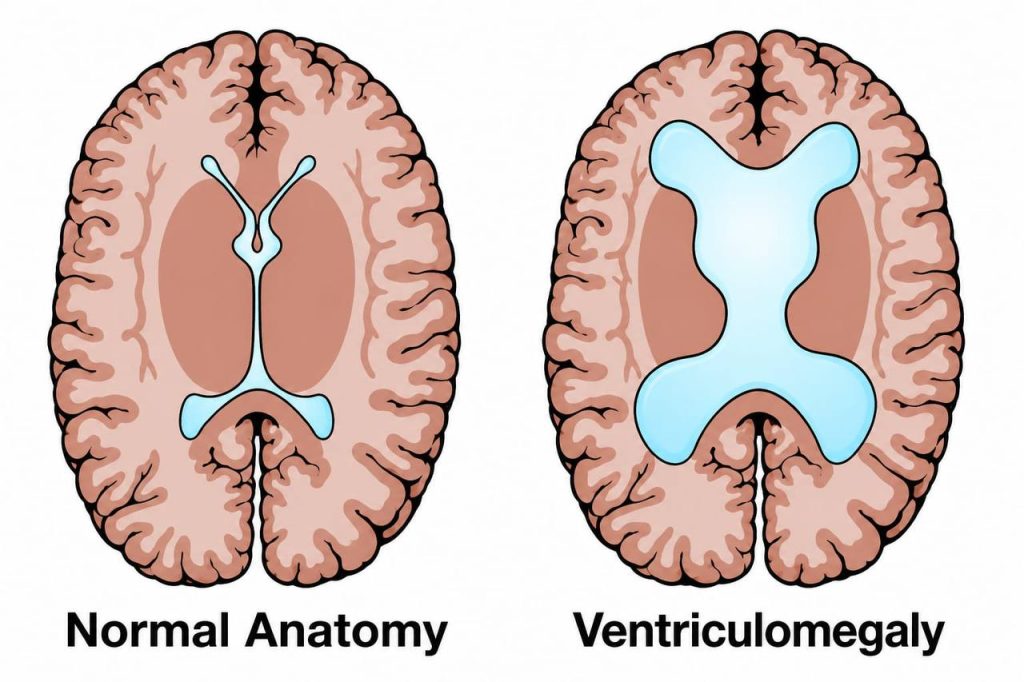
Differences in your baby’s brain development
Certain congenital conditions, such as spina bifida or agenesis of the corpus callosum
Chromosomal conditions, including Down syndrome
Pregnancy-related infections, such as cytomegalovirus (CMV) or syphilis
When ventriculomegaly is diagnosed, my priority is to determine whether it is an isolated finding or associated with another condition, as this greatly influences your baby’s outlook.
Does Ventriculomegaly Cause Symptoms?
During pregnancy, ventriculomegaly usually does not cause symptoms, and most mothers feel completely well. It is most often discovered during a routine ultrasound examination.
If ventriculomegaly is severe and progresses to hydrocephalus after birth, your baby may develop symptoms such as an enlarged head, a bulging soft spot, poor feeding, vomiting, irritability, sleepiness, or difficulty looking upward. Fortunately, many babies with mild ventriculomegaly never develop these problems.
How I Diagnose Ventriculomegaly
If I detect enlarged ventricles during your baby’s anatomy scan, I may recommend additional tests to better understand the diagnosis, including:
A detailed fetal ultrasound
Fetal MRI for a more detailed assessment of the brain
Amniocentesis, when appropriate, to evaluate for genetic conditions or infections
Serial ultrasound examinations to monitor whether the ventricles remain stable, improve, or enlarge over time
I classify ventriculomegaly according to the width of the ventricles:
Mild: 10–12 mm
Moderate: 13–15 mm
Severe: Greater than 15 mm
This classification helps me estimate your baby’s prognosis and determine the most appropriate follow-up plan.
How I Care for You During Pregnancy
If your baby is diagnosed with ventriculomegaly, I will monitor your pregnancy closely with regular ultrasound examinations to assess your baby’s brain development and overall well-being. My goal is to detect any changes early, identify associated conditions, and provide you with accurate information throughout your pregnancy.
In many cases, especially when ventriculomegaly is mild and isolated, the ventricles remain stable or even return to normal before birth.
What Happens After Birth?
After delivery, your baby may undergo an ultrasound or MRI to evaluate whether the enlarged ventricles persist and whether there is increased pressure within the brain.
Most babies with mild isolated ventriculomegaly do not require surgery and grow and develop normally.
If hydrocephalus develops, your baby may need treatment to drain the excess cerebrospinal fluid. The most common procedures include:
Ventriculoperitoneal (VP) shunt, which diverts excess fluid from the brain to the abdomen.
Is There Anything You Can Do?
Unfortunately, there is no known way to prevent ventriculomegaly. However, early diagnosis and expert prenatal care make an important difference. I will continue to monitor your baby’s condition throughout your pregnancy, coordinate any additional testing that may be needed, and ensure you receive comprehensive counseling and support every step of the way. My goal is to provide you with the knowledge, reassurance, and specialized care you need to achieve the best possible outcome for you and your baby.
Endoscopic Third Ventriculostomy (ETV), a minimally invasive procedure that creates a new pathway for cerebrospinal fluid to flow.
If treatment becomes necessary, I will work closely with pediatric neurosurgeons and neonatologists to ensure your baby receives the best possible care.
What Can You Expect?
I understand that receiving a diagnosis of ventriculomegaly can be overwhelming. The reassuring news is that about 90% of babies with mild isolated ventriculomegaly have normal long-term development and experience no significant neurological problems.
Every pregnancy is unique, which is why I take a personalized approach to your care. I will guide you through each step, explain every test and result, answer your questions, and help you make informed decisions with confidence and compassion.
Will This Affect Your Delivery?
In most cases, ventriculomegaly does not change your delivery plan. Many mothers can safely have a vaginal delivery. If your baby has significant enlargement of the head or other associated conditions, I may recommend a cesarean delivery or delivery in a tertiary care center with a Neonatal Intensive Care Unit (NICU) and pediatric specialists available.
Is There Anything You Can Do?
Unfortunately, there is no known way to prevent ventriculomegaly. However, early diagnosis and expert prenatal care make an important difference. I will continue to monitor your baby’s condition throughout your pregnancy, coordinate any additional testing that may be needed, and ensure you receive comprehensive counseling and support every step of the way. My goal is to provide you with the knowledge, reassurance, and specialized care you need to achieve the best possible outcome for you and your baby.