
The group of muscles that keep your pelvic organs such as your bladder, uterus, vagina, small bowel and rectum in place is called the pelvic floor. In some cases, these muscles and tissues develop problems, known as pelvic floor disorders. Some women may develop these issues after childbirth or due to aging. A pelvic organ prolapse refers to the drooping of any of the pelvic floor organs into the outside of the vaginal canal or anus.
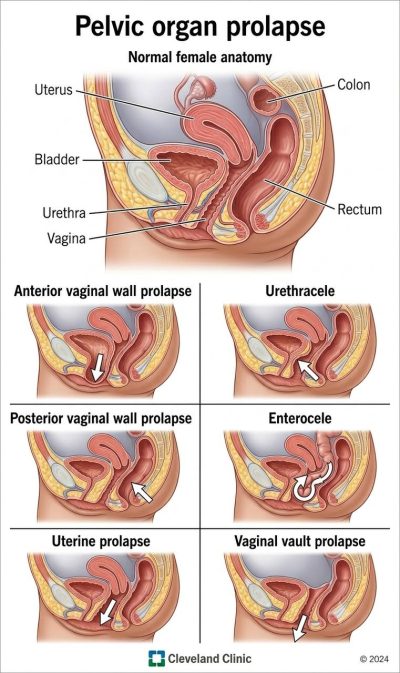
Typical examples of a pelvic organ prolapse include:
- Cystocele: A prolapse of the bladder into the vagina.
- Urethrocele: A prolapse of the urethra.
- Uterine Prolapse
- Enterocele: small bowel prolapse.
- Vaginal Vault Prolapse: prolapse of the vagina.
- Rectocele: rectum prolapse.
PELVIC ORGAN PROLAPSE CAUSES
Activities or events that put a lot of pressure on the abdomen can lead to pelvic organ prolapse. Common causes may include pregnancy, labor, childbirth, constipation, obesity, pelvic organ cancers, or hysterectomy. Genetics may also play some role in this condition, as some women may have weaker connective tissues. While some women with a pelvic organ prolapse may not have any symptoms, those who do may experience:
- Pressure or fullness in the pelvic region.
- Painful intercourse.
- A lower backache.
- Constipation
- Spotty vaginal bleeding.
- A feeling that something is falling out of the vagina.