Menopause is the time of a woman’s life when her reproductive years end. It is a normal part of aging that marks the end of a woman’s menstrual cycles, and usually occurs in your late 40s or early 50s. Menopause is defined as a year without any menstrual bleeding (in the absence of surgery or a medical condition that may cause bleeding to stop). As a woman ages, her reproductive cycle will start to slow down and her ovaries will create less estrogen.
This decrease in estrogen will cause the menstrual cycle to change, becoming irregular and eventually stopping. In the months or even years leading up to menopause, you can experience the following symptoms:
- Hot flashes
- Chills
- Night sweats
- Irregular periods
- Vaginal dryness
- Mood changes
- Weight gain
- Thinning hair
- And more.
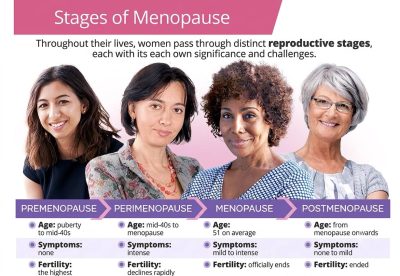
THE STAGES OF MENOPAUSE
The process of natural menopause is a gradual one and can usually be brokendown into three stages, which include:
- Perimenopause: Perimenopause begins when the ovaries slowly produce less estrogen, usually 8-10 years before menopause. This stage lasts until the ovaries
stop releasing eggs. In the last couple of years of perimenopause, many women will begin to experience common menopause symptoms. However, menstrual cycles are still happening, and pregnancy can still occur. - Menopause: Menopause marks the point when a woman stops having menstrual periods. The ovaries have stopped releasing eggs and producing most estrogen.
- Postmenopause: This describes the period of time after a woman has not had a menstrual cycle for an entire year. During this stage, menopause symptoms may ease up for some women. Post-menopausal women may have an increased risk for a number of health conditions like osteoporosis and heart disease due to their lower levels of estrogen.
TREATMENT OPTIONS FOR MENOPAUSE
Because menopause is a natural process that our body experiences, some women may not need any treatment. However, if the symptoms of menopause are disrupting your life, you may need to speak with a doctor regarding treatment options. The main types of treatment for menopause include:
- Hormone Therapy: When a woman’s ovaries no longer create enough of the hormones estrogen and progesterone, hormone therapy can help to relieve some
symptoms associated with menopause. There are two main forms of hormone therapy, including estrogen therapy (ET) and estrogen-progesterone therapy (EPT)
which can be taken as a pill, patch, cream, spray, gel, or vaginal ring. - Non-hormonal Treatments: Other treatment options to help ease the symptoms of menopause may include low-dose antidepressants or Gabapentin to reduce hot flashes, medications to prevent and treat osteoporosis, and lifestyle changes including diet and exercise.