
A colposcopy is a procedure done to examine the cervix, vagina, and vulva to detect disease. This test is usually performed if your Pap smear test results are abnormal, your cervix appears abnormal during a pelvic exam, you are experiencing unexplained bleeding, or you have human papillomavirus (HPV). Colposcopy can be used to diagnose the following:
- Inflammation of the cervix
- Genital warts
- Precancerous changes in the tissues of the cervix, vagina, or vulva.
THE COLPOSCOPY PROCEDURE
Prior to this test, your doctor may recommend that you take the following steps to prepare:
- Avoid scheduling your test during your period.
- Do not use tampons in the days leading up to a colposcopy.
- Avoid vaginal intercourse before your test.
- Avoid the use of vaginal medications for two days before your exam.
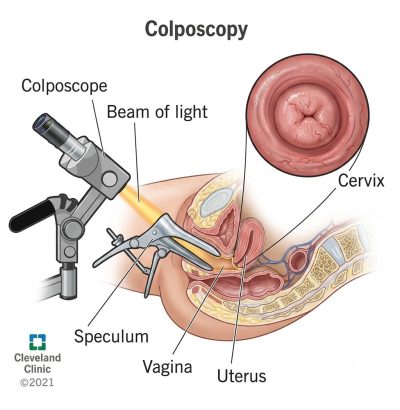
If I recommend a colposcopy, I will guide you through the procedure and explain every step so you know exactly what to expect. A colposcopy is very similar to a Pap smear, but instead of simply collecting cervical cells, I use a specialized magnifying instrument called a colposcope to examine your cervix in much greater detail. During the procedure, you will lie comfortably on the examination table with your feet supported in stirrups. I will gently insert a speculum into your vagina to clearly visualize your cervix. The colposcope remains outside your body and shines a bright light that allows me to carefully inspect the cervical tissue.
To help identify any abnormal areas, I will apply a mild vinegar-like solution to your cervix. This solution temporarily highlights abnormal cells, making them easier to detect. If I see an area that requires further evaluation, I may perform a small biopsy, removing a tiny sample of tissue to be examined in the laboratory. The biopsy usually causes only brief discomfort or mild cramping. The entire procedure typically takes 5 to 10 minutes, and most women are able to return to their normal activities shortly afterward. Once the laboratory results are available, I will review them with you, explain what they mean, and discuss any additional treatment or follow-up that may be needed.