
Perimenopause is the time during which a woman’s body starts the natural transition into menopause, which indicates the end of the reproductive years. Women can start perimenopause at different ages, with some noticing changes as early as their mid-30s. The level of the female hormone estrogen will rise and fall unevenly during perimenopause, which can cause your menstrual cycles to shorten or lengthen, and become irregular. During the last couple of years of perimenopause, the drop in estrogen speeds up, which can lead to various symptoms. The average length of this transition is about four years, but it may vary from person to person. Once a woman has experienced 12 consecutive months without a period, she has reached menopause. Common signs and symptoms of perimenopause are:
- Hot flashes
- Tender breasts
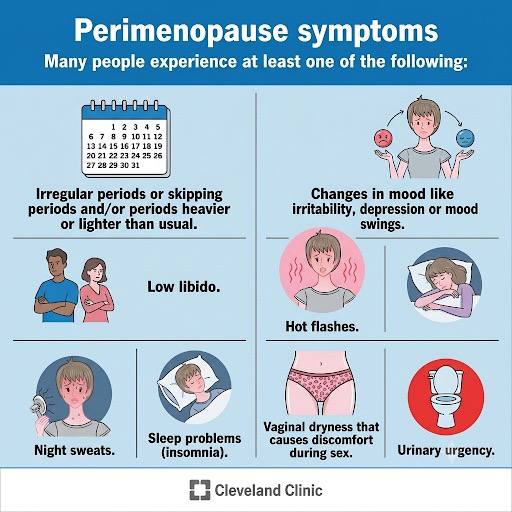
- Fatigue
- Low libido
- Vaginal dryness
- Irregular periods
- Mood swings
- Difficulty sleeping
- And more.
Although irregular menstrual periods are a common part of perimenopause, I understand that changes in your cycle can sometimes be caused by other medical conditions. If you notice that your periods become very heavy, contain large blood clots, last much longer than usual, or occur more frequently than expected, I encourage you to let me know. These symptoms deserve a thorough evaluation to determine whether they are simply part of the menopausal transition or a sign of another condition that requires treatment.
When you come to see me, I will carefully review your symptoms, medical history, and menstrual pattern, and recommend any necessary examinations or tests to identify the underlying cause of your abnormal bleeding.
TREATMENT OPTIONS FOR PERIMENOPAUSE SYMPTOMS
During perimenopause, some women may find that the associated symptoms are uncomfortable or negatively impact their daily life. In these cases, there are a variety of treatment options to help ease symptoms. These may include the following:
- Hormone Therapy: Estrogen therapy is currently the most effective treatment option for relieving hot flashes. It is available in a pill, patch, gel, cream, or spray form. It can also be given vaginally using a ring, cream, or tablet. For women who still have their uterus, the hormone progestin will need to be added along with estrogen.
- Antidepressants: Antidepressants that are related to the class of drugs called selective serotonin reuptake inhibitors (SSRIs) may help to lessen the severity and frequency of hot flashes. This option may be useful for those who cannot take estrogen or who have a mood disorder.
- Gabapentin: In some cases, this medication can help to reduce hot flashes. It is often a good option for those who cannot take estrogen or for those who have
frequent migraines. - Lifestyle Changes: Making certain lifestyle changes may help to ease some of the symptoms associated with perimenopause. This includes eating a healthy, well balanced diet, regularly exercising, getting consistent and quality sleep, and keeping stress levels under control.