
A Pap Smear is a procedure to test for cervical cancer. Detecting cervical cancer early on with a Pap smear can increase the chance for a cure. This test can also be used to identify changes in cervical cells that may be a sign of precancer.
A Pap Smear is typically performed along with a pelvic exam. Generally, it is recommended that you begin to have Pap smears at the age of 21. In women over 30 years old, a Pap smear may also be combined with a test for human papillomavirus (HPV). Women ages 21-65 should receive this test every three years.
THE PAP SMEAR PROCEDURE
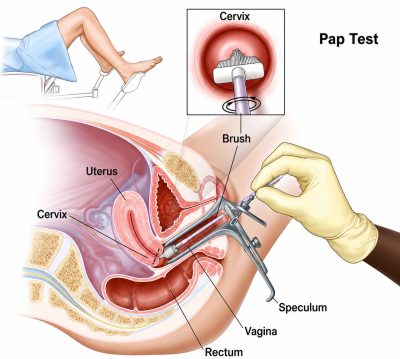
There may be some steps to take 48 hours ahead of time to prepare for your Pap smear. These may include avoiding sex, not using vaginal sprays, powders, or douches, and avoiding the use of tampons, medications, or creams in the vagina. You also should not have a Pap smear during your period, as heavy bleeding can
affect the test results. During the test, you will lie on the exam table with your feet placed in stirrups. A tool called a speculum will be inserted into your vagina for better visualization of the cervix. A swab will then be used to take a sample of cells from the cervix. This test should not be painful and usually takes about 10-20 minutes to complete.
PAP SMEAR RESULTS
After your Pap smear, I will send your cervical cell sample to a laboratory for detailed analysis. Once the results are available, I will review them carefully and discuss what they mean for your health. If your results are normal (negative), it means that no precancerous or cancerous changes were found in the cells of your cervix. In this case, I will recommend continuing routine cervical cancer screening based on your age, medical history, and current screening guidelines.
If your results are abnormal (positive), I will explain exactly what was found and what the next steps will be. An abnormal Pap smear does not necessarily mean that you have cervical cancer. In many cases, it may simply indicate mild inflammation, minor changes in the cervical cells (dysplasia), or an infection such as human papillomavirus (HPV). Less commonly, it may suggest precancerous changes or cervical cancer that require further evaluation. Depending on your results, I may recommend repeating your Pap smear after a few months to see if the abnormal cells have resolved on their own. If the changes persist or require closer evaluation, I may perform a colposcopy, a specialized procedure that allows me to examine your cervix in greater detail and, if necessary, obtain a small tissue sample for biopsy.
WHO CAN STOP HAVING PAP SMEARS?
In some cases, a woman may no longer require Pap smears. These instances include women who have had a total hysterectomy due to a noncancerous condition, or those who are over the age of 65. Be sure to discuss these options with your doctor if you are interested in stopping Pap testing.