
A gynecological or pelvic ultrasound is a diagnostic test to create images used to assess structures and organs within the female pelvis. It works by using ultrasound waves that move through the body to the structures and organs within.
These waves bounce off these organs, returning and converting into images. A gynecological ultrasound is often performed to diagnose and evaluate:
- Abnormal vaginal bleeding
- Pelvic pain
- Menstrual issues
- Pelvic infections
- Ovarian cysts
- The position of an IUD
- Uterine and ovarian cancer
- And much more.
THE GYNECOLOGICAL ULTRASOUND PROCEDURE
If I recommend a gynecologic ultrasound, I will explain the procedure beforehand so you know exactly what to expect. Depending on the reason for your examination, I may ask you to drink several glasses of water before your appointment so that your bladder is comfortably full, which helps improve visualization of your pelvic organs during a transabdominal ultrasound. If I am performing a transvaginal ultrasound, you will usually be asked to empty your bladder before the examination to make the procedure more comfortable.
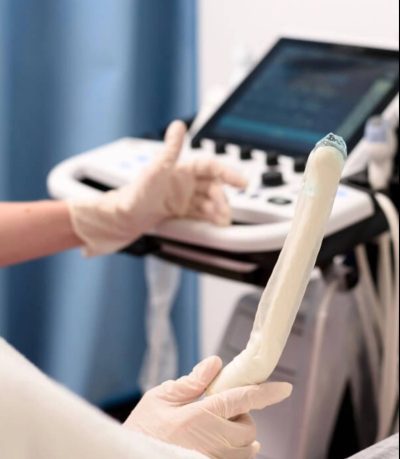
There are two types of gynecologic ultrasound that I may perform. A transabdominal (pelvic) ultrasound uses a handheld probe called a transducer, which I gently move over your lower abdomen after applying a small amount of ultrasound gel. This allows me to evaluate your uterus, ovaries, fallopian tubes, bladder, and surrounding pelvic structures. A transvaginal ultrasound provides a more detailed view of your reproductive organs. During this examination, I gently insert a slender, specially designed ultrasound probe into your vagina. While you may feel mild pressure, the procedure is generally well tolerated and should not be painful. Depending on your symptoms and the information I need, I may recommend performing both types of ultrasound during the same visit to obtain the most complete assessment. The entire examination usually takes about 30 minutes.
After your ultrasound, you can return to your normal daily activities unless I advise otherwise. Once I have carefully reviewed your images, I will discuss the results with you, explain what they mean, answer any questions you may have, and recommend any additional evaluation or treatment if needed.