
Sexually Transmitted Infections (STIs) and Sexually Transmitted Diseases (STDs) are conditions that are generally spread from one person to another through sexual contact. They can be caused by bacteria, viruses, or parasites, and can affect both men and women.
Individuals with STIs and STDs experience no symptoms at all, but if they do experience symptoms, they may include:
- Burning urination
- Sores or bumps on the genitals
- Discharge from the penis or vagina
- Pain during sex
- Vaginal bleeding
- Swollen or sore lymph nodes
- Fever
- And more.
Individuals who are sexually active are always at some risk of exposure to an STD or STI, though factors that may increase the chances of contracting one include having unprotected sex, having sex with multiple partners, having a history of STIs, being young, or injecting drugs (which is associated with HIV, and hepatitis B and C).
DIAGNOSIS AND TREATMENT OF STIS/STDS
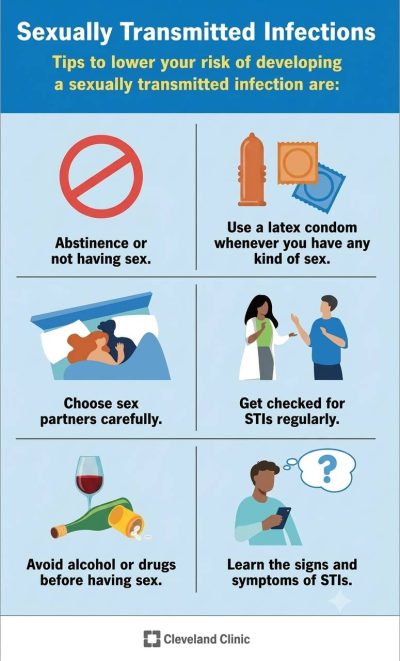
STI/STD PREVENTION
Overall, there are many different steps you can take to avoid or reduce your riskof getting an STI or STD. These include the following:
- Abstain from sex
- Only have sex with one uninfected partner
- Avoid sex with a new partner until you have both been tested for STIs and STDs
- Use condoms or other forms of contraception correctly and consistently
- Get vaccinated with the HPV vaccine
- Avoid drinking alcohol excessively or using drugs.