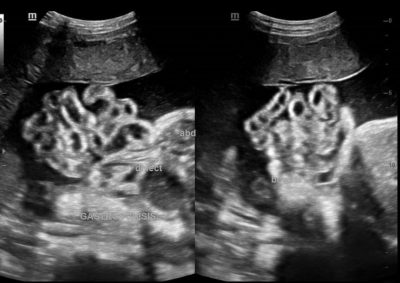
Gastroschisis is most often detected during a routine ultrasound between 18 and 20 weeks of pregnancy, although it can sometimes be identified as early as the first trimester. During the ultrasound, I can see the baby’s intestines developing outside the abdominal wall, which is the hallmark of this condition. Once gastroschisis is suspected, I will perform a comprehensive evaluation to better understand your baby’s condition and develop the most appropriate care plan.
If you are referred to me, I will coordinate your evaluation, which may include a detailed fetal ultrasound, and when necessary, a fetal MRI or fetal echocardiogram to assess your baby’s heart and other organs. I also work closely with a multidisciplinary team that includes minimally invasive pediatric surgeon, neonatologists, genetic counselors, nurses, and social workers, ensuring that every aspect of your baby’s care is carefully planned. One of my priorities is confirming that your baby has gastroschisis and not omphalocele, a similar condition in which the abdominal organs remain covered by a protective membrane. Making the correct diagnosis is essential because the treatment and expected outcomes differ between these conditions.
After completing your baby’s evaluation, I will personally review all of the findings with you and explain what they mean for the remainder of your pregnancy. Together, we will discuss your baby’s expected course after birth, the surgical treatment that will be needed, and the long-term outlook. If you choose to deliver at The Medical City Ortigas, I will also help you prepare for your delivery, coordinate your baby’s immediate surgical care with our pediatric surgery team, and discuss what to expect during your baby’s stay in the Neonatal Intensive Care Unit (NICU).