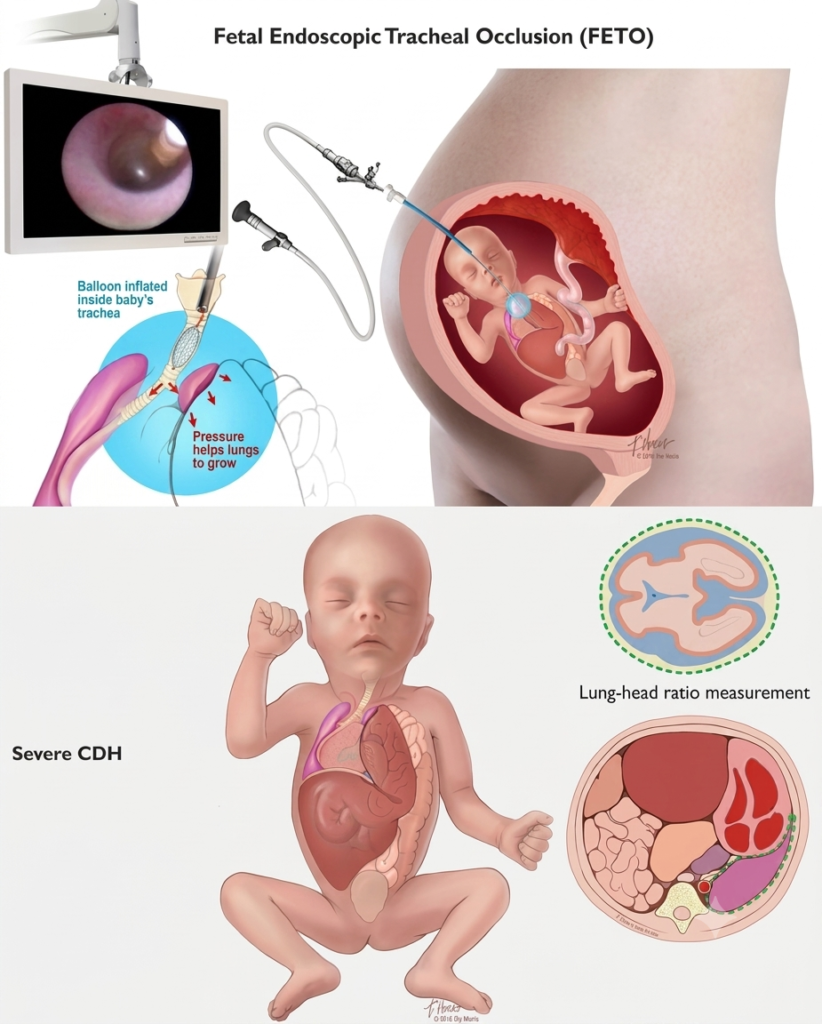
If your baby has severe CDH, I may discuss a specialized fetal procedure called Fetoscopic Endoluminal Tracheal Occlusion (FETO). Normally, your baby’s lungs produce fluid that flows out through the windpipe (trachea). During FETO, I will block the trachea with a small balloon, allowing this fluid to remain inside the lungs. The increased pressure encourages the lungs to grow and develop before birth, giving your baby a better chance of breathing after delivery. This treatment is only considered for carefully selected pregnancies where I believe both you and your baby have the greatest potential to benefit.
The FETO procedure is usually performed between 27 and 31 weeks of pregnancy using a minimally invasive fetoscopic approach. Through a small incision in your abdomen and uterus, I carefully guide a tiny camera and specialized instruments into your baby’s airway and place a small balloon inside the trachea. Since your baby continues to receive oxygen through the placenta, the balloon does not interfere with breathing before birth. The balloon remains in place for about 4 to 6 weeks, during which I’ll monitor you and your baby closely with regular ultrasound examinations. Between 32 and 34 weeks, I’ll perform a second procedure to remove or deflate the balloon so your baby’s lungs can continue to mature before delivery. After birth, your baby will receive specialized neonatal care, followed by surgery to repair the diaphragmatic defect. Before recommending FETO, I’ll perform a comprehensive evaluation of your pregnancy, review your medical history, and discuss the benefits and potential risks with you.
Who can have the FETO procedure?
It is not an appropriate treatment for all cases of CDH diagnosed in utero. It is only offered in instances of severe CDH where we feel the mother and baby will have the most potential to benefit from the procedure. We conduct thorough diagnostics and review of a mother’s medical history to determine the appropriate treatment for our patients on an individual basis.