If your baby is diagnosed with a SCT, I will recommend that you deliver at a medical center like The Medical City Ortigas with a Level III Neonatal Intensive Care Unit (NICU) and a dedicated pediatric surgery team, where your baby can receive specialized care immediately after birth. Because SCT can increase the risk of preterm delivery, I will monitor your pregnancy closely and recommend the safest timing for delivery. In most cases, I advise Cesarean delivery, as the tumor is often large and fragile, and this approach helps reduce the risk of injury to both you and your baby during birth.
If you choose to continue your care with me, I will follow your pregnancy closely with regular ultrasounds and fetal echocardiograms to monitor the growth of the tumor, your baby’s heart function, and your overall health. Even babies with smaller tumors can become critically ill over a short period, so careful surveillance is essential. As your pregnancy progresses, I will also monitor you for complications such as preterm labor, preeclampsia, and maternal mirror syndrome. After approximately 30 weeks of pregnancy, I may recommend an amniocentesis to assess your baby’s lung maturity. If the lungs are sufficiently developed and I believe the risks of remaining in the womb outweigh the benefits, I may recommend an earlier delivery to improve your baby’s chances of a healthy outcome.
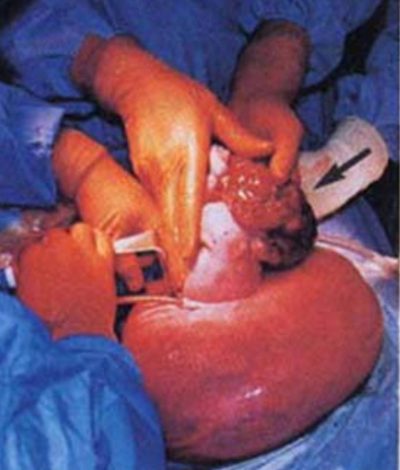
Most babies with SCT undergo surgical removal of the tumor within the first one to two days after birth. However, if your baby develops severe heart failure while still too premature for delivery, I may discuss the option of open fetal surgery, also known as in utero debulking. During this highly specialized procedure, I make an incision in your abdomen and uterus to carefully expose your baby’s lower body, allowing the pediatric fetal surgery team to remove most of the external portion of the tumor. Reducing the size of the tumor decreases the workload on your baby’s heart and provides an opportunity for recovery while the pregnancy continues. After the procedure, your baby is gently returned to the uterus, and I will administer medications to reduce the risk of preterm labor. Once your baby is born, the remaining portion of the tumor is removed during a second surgery. If your baby is too ill to safely tolerate fetal surgery or if you develop maternal mirror syndrome, which can become life-threatening, I will recommend immediate delivery because protecting your health is always my highest priority.
 After delivery, I will work closely with our NICU and pediatric surgery teams to stabilize your baby before surgery is performed, usually within the first 24 to 48 hours of life. Although most SCTs are benign, a small number can be malignant, particularly larger tumors. Fortunately, when cancer is present, these tumors usually respond very well to chemotherapy. Babies who do not require fetal intervention have an excellent prognosis, with survival rates exceeding 90%, while survival after open fetal surgery is approximately 50%, reflecting the severity of cases selected for prenatal intervention.
Even after successful treatment, I will continue to follow your child’s progress. Your baby will need regular follow-up for at least the first three years of life to monitor for any recurrence of the tumor and to assess growth and development. Most children go on to live healthy lives, although some may require additional care for complications involving the bowel, bladder, pelvic muscles, or the effects of prematurity. I work closely with pediatric surgeons, neonatologists, pediatric urologists, rehabilitation specialists, and other experts to ensure that your child receives comprehensive, coordinated care.
From the moment you first meet me through your pregnancy, delivery, and your baby’s long-term follow-up, I will be with you every step of the way.