
If your baby is diagnosed with a Congenital Pulmonary Airway Malformation (CPAM), I will guide you through every step of the evaluation and care. CPAM is often first detected during your routine prenatal ultrasound. To better understand your baby’s condition, I may recommend additional tests such as a fetal MRI to determine the size and location of the lung lesion and evaluate how it is affecting lung development, as well as a fetal echocardiogram to assess whether the lesion is impacting your baby’s heart structure and function. These detailed assessments allow me to create the safest and most appropriate care plan for you and your baby.
After confirming the diagnosis, I will closely monitor both you and your baby throughout your pregnancy. Together with our multidisciplinary fetal care team, I will explain every test result in a way that is easy to understand and work with you to develop a personalized treatment plan. If you were referred by your obstetrician or another physician, I will collaborate closely with them so we can provide coordinated care while keeping them updated on your baby’s progress.
One of the most important parts of monitoring CPAM is performing weekly ultrasound examinations. These scans allow me to see whether the lung lesion is growing and whether your baby is developing hydrops, a serious condition caused by fluid accumulation in different parts of the body. During each ultrasound, I also calculate the CPAM Volume Ratio (CVR), which compares the size of the lung lesion with your baby’s head circumference. A CVR below 1.6 is generally associated with a favorable outlook, while a CVR of 1.6 or higher indicates a greater risk of hydrops and may mean that fetal intervention should be considered.
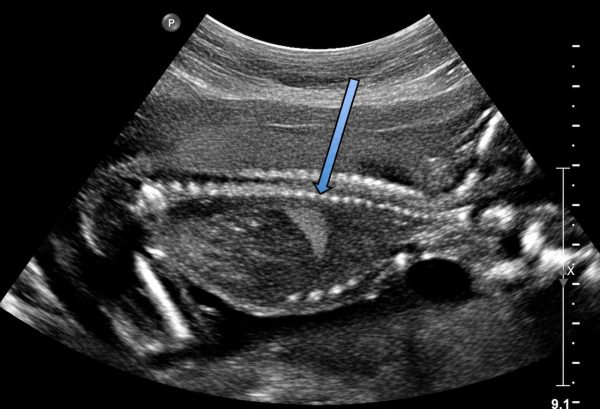
I also carefully monitor your placenta because placental swelling can be an early sign of mirror syndrome, a rare but serious condition in which the mother develops symptoms that mirror the baby’s hydrops. Since this condition can put your health at risk, I will discuss all available options with you, including the possibility of early delivery if it becomes the safest course of action for both you and your baby.
The reassuring news is that in most pregnancies, the CPAM stops growing at around 26 weeks of gestation. If your baby reaches this stage without developing hydrops, the risk of this life-threatening complication becomes extremely low.