Several different techniques have been used to treat TRAP sequence by interrupting the connection between the acardiac/acephalic twin and the normal or pump twin to increase the chances that the pump twin will survive. These techniques include cord occlusion by embolization, ligation, laser photocoagulation, monopolar and bipolar diathermy. Intrafetal ablation has also been performed by alcohol injection, monopolar diathermy, interstitial laser, and radiofrequency ablation (RFA).
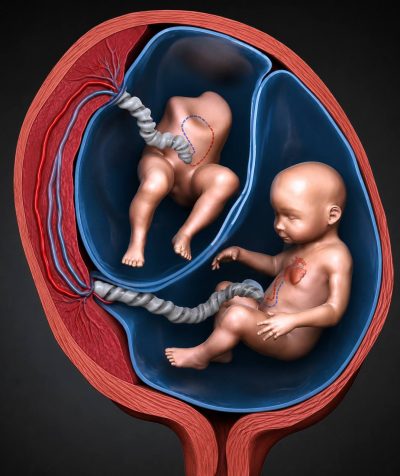
In a review of the various techniques that have been reported to treat TRAP sequence, Tan et al concluded that intrafetal RFA ablation was superior to minimally invasive methods used to coagulate the umbilical cord. RFA was associated with lower rate of premature delivery, rupture of membranes before 32 weeks’ gestation (23% vs 58% for other techniques), and a higher rate of clinical success than cord occlusion techniques. A more recent study by Livingston et al found that primary treatment with RFA is a successful method for pregnancies complicated by TRAP sequence. The study included 17 women with pregnancies complicated by TRAP who were treated with RFA at the Fetal Care Center. All these women had one or more poor prognostic factors warranting intervention. Sixteen of the other 17 women (94%) treated with RFA delivered a pump twin survivor. The one pump twin who did not survive postoperatively had hydrops (in utero heart failure).
The average gestational age at time of treatment was 21 weeks (range 17-24 weeks), and the average gestational age at delivery was 37 weeks (range 26 39 weeks). The 94% success rate is identical to that reported by Tsao and colleagues who also used an identical RFA treatment method and compares favorably to the 80% survival in a study among 60% women treated with fetoscopic laser photocoagulation.