
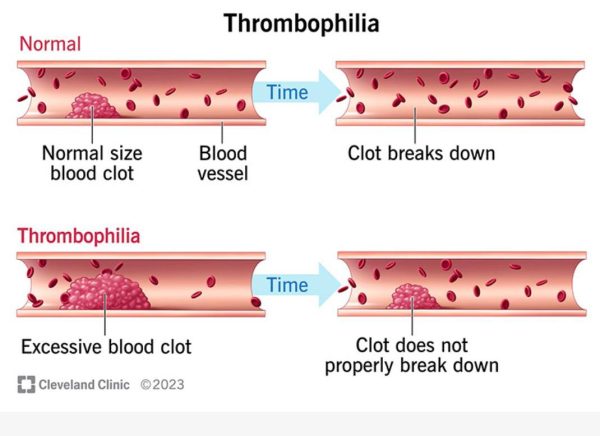
Thrombophilia is a condition in which individuals are prone to developing blood clots in the blood vessels. Normally, when you cut your skin and bleed, coagulation proteins and clotting blood cells (platelets) work to stop the bleeding through clotting. Once the bleeding stops, the clot dissolves. People with thrombophilia may experience abnormal clotting, such as blood clots that form even without sustaining an injury and blood clots that prohibit blood flow to the heart and other organs. This puts them at a higher risk of developing deep vein thrombosis (DVT), a pulmonary embolism, a heart attack, and a stroke. However, it is good to be aware that almost 90% of people with thrombophilia never get a blood clot, so this condition can be successfully managed.
There are two types of thrombophilia, including:
- Inherited Thrombophilia
Individuals with inherited or genetic thrombophilia were born with the condition. Types of genetic thrombophilia may include Factor V Leiden, Protein C Deficiency, Protein S Deficiency, a prothrombin gene mutation, or antithrombin deficiency. These conditions may impact the coagulation system or cause a genetic mutation that increases the risk of developing abnormal blood clots. If a genetic condition is found, genetic counselors may be consulted to better understand the underlying cause and provide the best possible treatment
- Acquired Thrombophilia
This occurs when an organ in your body does not make or clear away clotting proteins properly, which prevents blood clots from forming. Factors that can increase the risk of developing thrombosis include surgery, limited mobility, and inflammatory conditions. The most commonly acquired form is antiphospholipid antibody syndrome, which is an autoimmune disorder that can increase the chances of pregnancy complications and miscarriage.
Thrombophilia and Pregnancy Complications
Patients with the form of acquired thrombophilia called antiphospholipid antibody syndrome have an increased risk of pregnancy complications such as preeclampsia, a small birth weight, miscarriage, and stillbirth. This syndrome occurs when your immune system mistakenly creates antibodies that make your blood more likely to clot. While there is no cure for this syndrome, there are certain medications that can be taken to reduce your risk of developing blood clots.