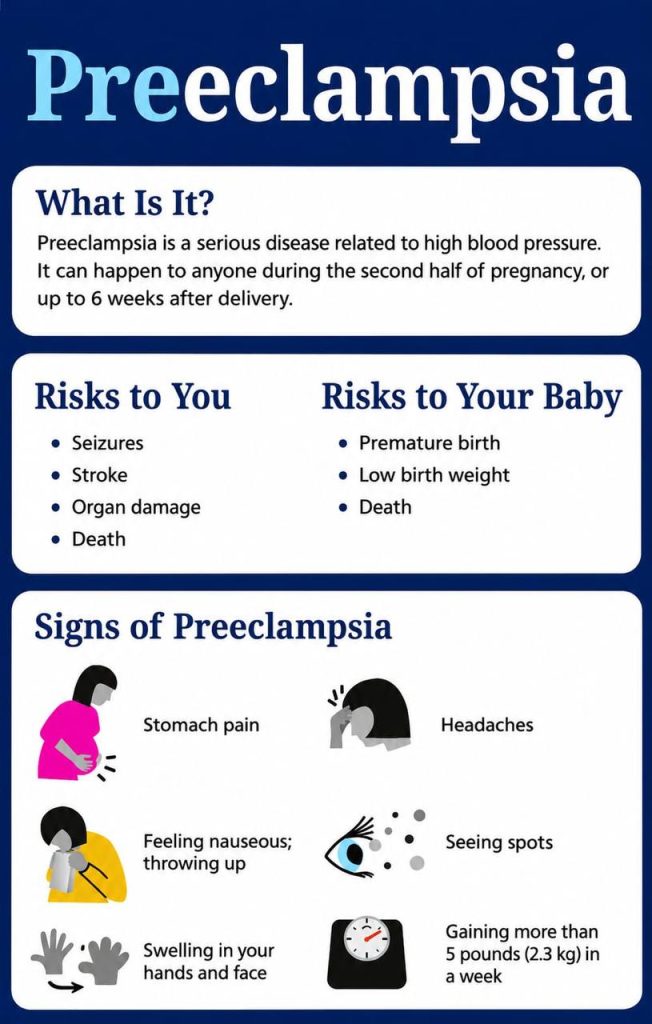
Preeclampsia is a serious pregnancy condition that usually develops after 20 weeks of pregnancy and is characterized by high blood pressure. Although it often involves protein in the urine, it can also affect many other organs, including your kidneys, liver, brain, lungs, and blood clotting system. If left untreated, it can become life-threatening for both you and your baby.
My goal is to identify preeclampsia as early as possible through careful prenatal care, close monitoring, and timely treatment. Early recognition allows me to intervene before serious complications develop and helps achieve the safest possible outcome for both you and your baby.
Is Preeclampsia an Emergency?
Yes. Preeclampsia can become a medical emergency if it progresses or is left untreated. High blood pressure places stress on your heart and blood vessels and can reduce blood flow to the placenta, affecting your baby’s growth and well-being. In severe cases, it may lead to seizures (eclampsia), stroke, liver or kidney injury, fluid in the lungs, HELLP syndrome, or other life-threatening complications.
If I suspect that your condition is becoming severe, I may recommend immediate hospitalization and, when necessary, delivery of your baby to protect both of you.
Why Does Preeclampsia Happen?
Although the exact cause is not completely understood, research suggests that preeclampsia begins with abnormal placental development early in pregnancy. As your pregnancy progresses, the placenta may release substances into your bloodstream that affect your blood vessels and organs, leading to high blood pressure and other complications. Your individual risk is also influenced by factors such as chronic hypertension, kidney disease, diabetes, obesity, autoimmune conditions, and family history.